
Choosing the right fencing solution for your jobsite in Washington involves balancing the need for immediate flexibility with long-term security and financial return. Without a robust perimeter, Washington projects face extreme vulnerability to theft and vandalism, making a strategic choice between portable and permanent barriers essential for protecting high-value equipment and project timelines.
Can a single decision in March dictate the profitability of your entire construction project by December? As project managers across Washington finalize bids and mobilize crews, the question of jobsite perimeter protection becomes a central pillar of the planning process.
While a simple chain link barrier appears sufficient on paper, the reality of equipment theft and rising material costs tells a different story. In an era where copper and heavy machinery are prime targets for organized theft rings, the barrier you choose acts as the first and final line of defense for your bottom line.
For some projects, the need to move barriers as the footprint evolves makes portable fencing the logical choice. For others, the high-stakes nature of the assets on-site demands the psychological and physical deterrence of a permanent electric solution.
Let’s dive into each of these options so that you can make the right choice for your jobsite.
Table of Contents
How do You Define the Scope of Your Fencing Needs?
Choosing a fence requires an honest assessment of site duration and the value of what stays behind the gate after the sun goes down.
A short-term renovation in a high-traffic area might only require the visual boundary of temporary construction fencing, while a multi-year infrastructure project needs a more rugged, permanent approach.
Every site has a unique pulse, and matching the rhythm of your security to the pace of construction is the hallmark of a seasoned project manager.
Reliable security prevents the delays that ripple through a project when essential tools vanish overnight.
Why is Portable Fencing a Good Option for Jobsites?
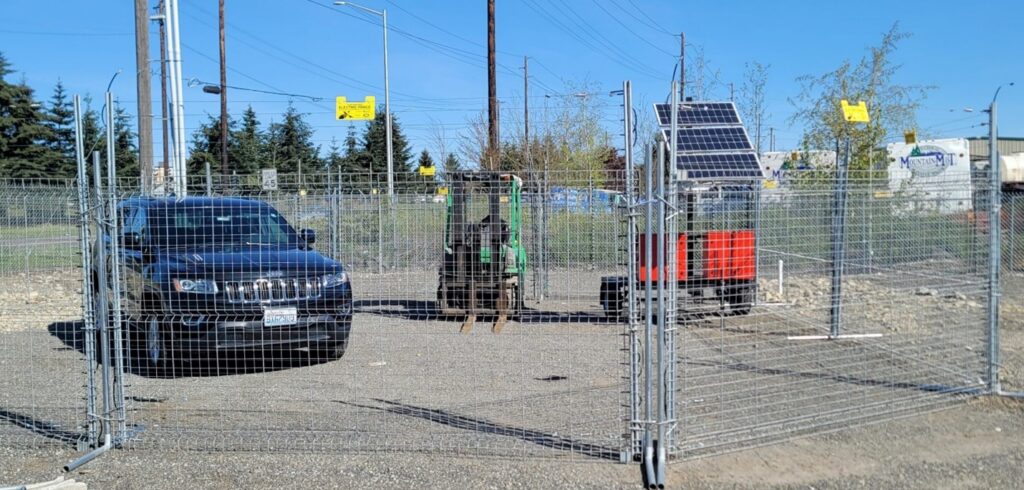
Portable fencing is a staple in the construction world due to its incredible adaptability. These systems usually consist of chain link panels held together by weighted stands or driven posts. This setup allows project managers to reconfigure the perimeter as the building grows or as access points change.
This flexibility is vital during the early phases of excavation or when utility work requires frequent adjustments to the site boundary.
While the convenience is high, the security level of standard portable options is generally lower than fixed alternatives. Most temporary panels are designed to deter casual trespassers rather than determined criminals equipped with basic tools.
However, for projects lasting less than a year, the lower upfront investment and ease of removal often outweigh the need for a fortified permanent structure. Here’s more on the key advantages of portable fencing:
- Rapid Deployment: Panels can be delivered and installed within hours, providing an instant boundary for new sites.
- Modularity: Easily add or remove sections to accommodate large deliveries or changes in the site footprint.
- Minimal Site Impact: Because most portable systems don’t require deep post holes, they leave the ground undisturbed, which is perfect for finished surfaces.
- Cost-Effective Short-Term Use: Rental models allow you to pay only for the duration you need, keeping capital free for other expenses.
Choosing a portable fencing system ensures that your team can pivot quickly as site requirements evolve.
Why is Permanent Electric Fencing a Good Option for Jobsites?
For projects with a long horizon or those housing millions of dollars in equipment, a permanent electric fence offers a level of protection that portable options can’t match.
This isn’t merely a physical barrier; it’s an active security system. By delivering a non-lethal but memorable shock, an electric fence provides an immediate deterrent that discourages even the most brazen intruders from attempting a breach.
In a jobsite perimeter protection strategy, the “permanent” label refers to the stability and reliability of the installation. These systems are anchored into the ground, making them resistant to the wind and weather that can topple temporary panels in the Pacific Northwest.
While the initial setup requires a higher investment, the long-term ROI is found in the near-total elimination of theft-related losses.
An electric fence provides a psychological barrier that standard fencing lacks, forcing intruders to look for easier targets elsewhere. Strategic benefits of permanent fencing for jobsites include:
- Active Deterrence: The presence of high-voltage signs and energized wires stops a crime before it even begins.
- Integrated Monitoring: Modern electric fences can be tied into alarm systems, notifying security personnel the moment the perimeter is touched.
- Durability: Built to withstand years of service, these fences require minimal maintenance compared to the constant upkeep of leaning temporary panels.
- Superior ROI: Over a multi-year project, the cost of an electric fence is often lower than the recurring rental fees and potential theft losses associated with temporary options.
Investing in a permanent solution transforms your perimeter from a simple line on a map into a sophisticated security asset.
Compare Permanent vs. Portable Fencing
Before making your choice between a permanent electric fence and portable fencing, take a side-by-side look at how these two categories perform over time. Below is a comparison to help you visualize the trade-offs between flexibility and long-term security.
| Feature | Portable/Temporary Fencing | Permanent Electric Fencing |
| Primary Goal | Site delineation & basic safety | Active theft prevention & deterrence |
| Installation Speed | High (Hours to Days) | Moderate (Days to Weeks) |
| Flexibility | Extremely high; panels move easily | Low; fixed in place once installed |
| Initial Cost | Low (Rental or purchase) | High (Infrastructure & energizers) |
| Deterrence Level | Visual/Passive | Physical/Active |
| Typical Duration | 1 – 12 Months | 12+ Months / Permanent sites |
| Resistance to Breech | Low (Can be cut or moved) | High (Alarmed & energized) |
An electric fence cost comparison often shows that while the starting price is higher, the lack of monthly rental fees makes it the cheaper option for long-haul projects.
What Factors Matter Most When Choosing Permanent vs. Portable Fencing?
The final decision usually hinges on a simple question: How long will this fence need to stay up?
If you’re managing a six-month residential build, temporary construction fencing is likely the most efficient path forward. It keeps the public safe and satisfies insurance requirements without a heavy capital outlay. The flexibility to move panels as landscaping begins or driveways are poured is also a benefit that can’t be overlooked.
However, if your project spans two years or more, or if you’re securing a permanent equipment yard, the shift toward permanent electric fencing is nearly always the better financial move.
The cost of renting portable panels over 24 months can easily exceed the purchase and installation of a permanent system. Furthermore, the peace of mind provided by an energized barrier is invaluable when you consider that a single theft of specialized machinery can cost more than the entire fence itself.
Evaluating the following points will lead you to the most effective security posture for your specific Washington jobsite:
- Site Value: Total the replacement cost of your on-site tools and materials to see if it justifies an electric system.
- Local Crime Rates: Research recent theft trends in your specific Washington neighborhood or county.
- Terrain and Weather: Determine if the ground and local wind speeds allow for stable portable panels or require driven posts.
- Project Timeline: Calculate the break-even point where purchasing a permanent system becomes cheaper than long-term rental.
By weighing these factors, you ensure that your security choice supports the financial health of the project.
Who Provides the Best Security Fencing Solutions in Washington?
As a locally owned leader in Washington, Security Gate and Access understands that a fence is only as good as its installation and the technology behind it.
We provide high-performance security solutions that go beyond basic barriers, offering contractors and property managers a range of options from automated gates to advanced electric fencing.
Our team takes a narrative-driven approach to your security, walking the site to identify vulnerabilities and recommending the specific assets that will protect your investment through every phase of construction.
Working with a local expert ensures that your fencing complies with Washington-specific regulations and can withstand our unique climate. We prioritize reliability and clear communication, ensuring that your jobsite perimeter protection is seamless and effective.
Whether you need a robust gate for a permanent facility or an electrified perimeter for a high-risk site, we deliver the expertise needed to keep your project on track.
What’s the Long-Term ROI of Choosing the Right Security Fencing Solution?
In the final analysis, the “right” fence is the one that prevents your project from becoming a statistic.
While portable fencing offers a low barrier to entry and unmatched convenience, it can’t compete with the sheer defensive power of a permanent electric system. Look past the initial invoice and see the lifetime value of the asset.
Securing your site effectively means fewer insurance claims, zero downtime due to stolen equipment, and a professional image that tells clients and the community that you take safety seriously.
As you finalize your March bids, remember that the perimeter you build today is the protection you rely on every night until the job is done. A well-protected site is a profitable site.