
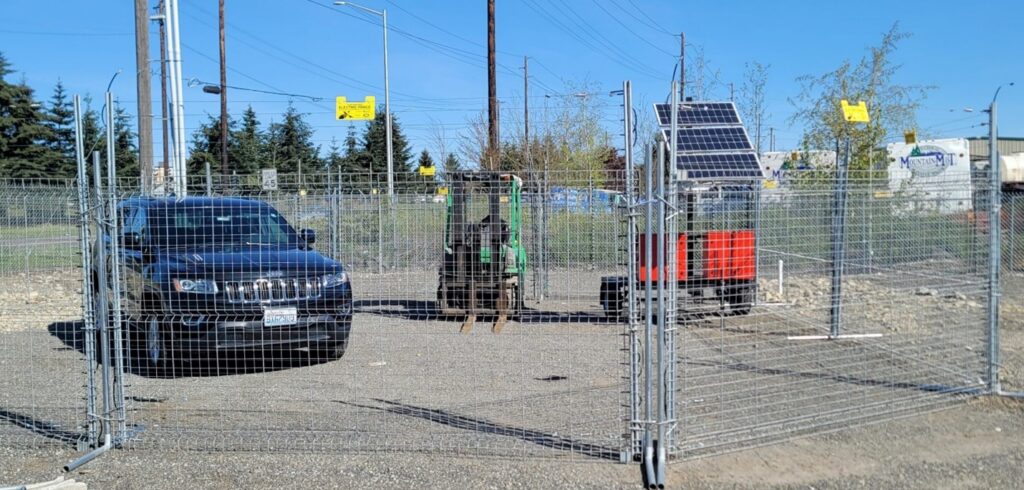
Construction site theft rises in Washington during March as increased project activity and longer daylight hours provide more targets for criminals. To stop these crimes, managers must implement robust jobsite security systems, specifically high-voltage solar electric fencing and mobile surveillance, which offer the most effective physical and psychological deterrents against equipment and copper theft.
Could the return of warmer weather and the official start of the building season actually be the biggest threat to your project’s bottom line?
As March arrives, Washington construction sites hum with new energy, but this seasonal “break ground” period also signals a massive spike in criminal activity. Thieves view the influx of new machinery, high-value materials, and the chaotic early stages of site development as a buffet of opportunity. While crews focus on pouring foundations and framing structures, organized theft rings focus on the gaps in your perimeter.
The financial impact of construction site theft extends far beyond the price of a stolen skid steer or a few rolls of wire. When a site experiences a breach, the resulting downtime, insurance premium hikes, and project delays can spiral into hundreds of thousands of dollars in losses.
Spring serves as a wake-up call for project managers to move past basic chain-link fences and look toward advanced technology to safeguard their investments.
Understanding why these crimes peak now is the first step toward securing your perimeter for the duration of the build.
Table of Contents
Why Does Construction Site Theft Rise in March?
The transition from winter to spring creates a “perfect storm” for theft. As more sites go active simultaneously, local police resources become stretched thin, making it easier for criminals to move between job sites undetected.
Furthermore, the early stages of construction involve large quantities of raw materials, like copper and lumber, which are frequently left exposed before the building envelope is secure. Criminals are well aware that the first few weeks of a project are the most disorganized from a security standpoint.
Preventing copper theft on site becomes particularly difficult when the price of scrap metal rises alongside the seasonal demand for electrical components. Copper is a top target because it is difficult to track once stripped and offers a high payout for relatively little effort.
If your security relies solely on a padlock and a prayer, you’re essentially inviting “crimes of opportunity” onto your property. Without a clear deterrent, a thief sees your jobsite as a low-risk, high-reward environment.
A lapse in early-stage security can haunt a project’s budget for its entire lifecycle.
Why is Electric Fencing the Best Choice for Construction Sites?
When it comes to stopping a determined intruder, a physical barrier that fights back is the gold standard.
Solar electric fencing has revolutionized how project managers handle remote or temporary jobsites where traditional power may be unavailable.
These systems deliver a safe but painful non-lethal shock that serves as an immediate physical deterrent. Unlike a standard fence that a criminal can simply cut through, an energized perimeter creates a psychological wall that most thieves refuse to test.
The beauty of these jobsite security systems lies in their autonomy. Solar-powered units remain active even during power outages or before the local utility has connected the site to the grid. This ensures that your perimeter is “live” 24/7.
When a thief sees the warning signs and hears the low hum of an energized wire, they almost always move on to an easier, less painful target.
Electric fencing removes the “low risk” element from the criminal’s calculation. It outweighs traditional barriers in a few ways:
- Constant Power: Integrated battery backups and solar arrays keep the fence energized through Washington’s cloudiest spring days.
- Instant Notification: Many systems connect directly to a monitoring center, alerting you the moment a wire is touched or cut.
- Cost-Efficiency: The price of a rental system is often lower than the cost of a single stolen catalytic converter or copper spool.
- Mobility: These systems can be moved and reconfigured as the site footprint changes during different phases of construction.
A live perimeter acts as both a guard and a gatekeeper for your most valuable assets.
Why is Mobile Surveillance Beneficial for a Construction Site?
While a fence provides the physical barrier, mobile surveillance trailers provide the necessary evidence and real-time response capabilities.
Modern jobsite security systems frequently pair electric fencing with high-definition, AI-driven cameras. These units are designed to detect human movement while ignoring wind-blown debris or local wildlife, reducing the “false alarm” fatigue that plagues older security models. Having a visual record of everyone who approaches your site is a massive advantage for both prevention and prosecution.
If a breach is attempted, mobile surveillance allows for immediate intervention through “talk-down” features. A remote operator can speak through a loudspeaker on the site, informing the intruder that the police are on their way and that their face has already been recorded.
This combination of high-tech sight and high-voltage touch makes a jobsite nearly impenetrable to all but the most reckless individuals.
Integrating visual data with physical barriers creates a layered defense that protects every corner of the lot. You get:
- 360-Degree Coverage: Panoramic cameras eliminate blind spots where thieves like to hide their vehicles.
- Thermal Imaging: Detect heat signatures in total darkness or through heavy Washington fog and rain.
- Remote Accessibility: Project managers can view live feeds from their smartphones at any time, day or night.
- Evidence Collection: Cloud-based storage ensures that footage is safe even if the physical camera unit is attacked.
Visible cameras serve as a constant reminder that your site is under professional watch.
Comparing the Effectiveness of Different Security Methods
Not all security measures are created equal. Choosing the wrong one can lead to a false sense of safety that evaporates the moment a thief arrives with a pair of bolt cutters. The following table compares common methods used to combat construction site theft.
| Security Method | Deterrence Level | Cost-to-Value Ratio | Resistance to Copper Theft |
| Standard Chain Link | Low | Poor (Easily bypassed) | Negligible |
| Security Guard | Moderate | Low (Expensive & Human Error) | Moderate |
| Solar Electric Fencing | Extremely High | Excellent (Active Barrier) | High |
| Mobile Surveillance | High | High (Visual Evidence) | Moderate |
| Integrated System | Maximum | Superior (Full Protection) | Maximum |
At the end of the day, an integrated approach using both fencing and cameras offers the best protection for high-value Washington projects.
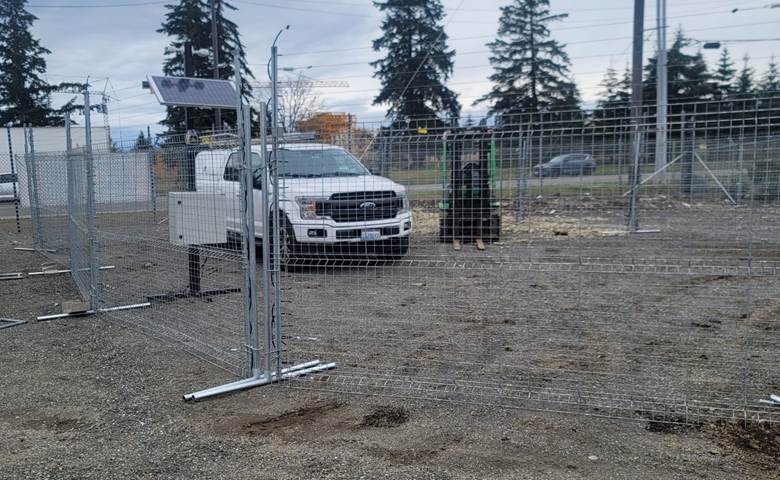
How do You Develop a Culture of Site Security Among Your Construction Crew?
Beyond the hardware, stopping construction site theft requires a change in mindset among the entire crew.
Security should be treated with the same level of importance as OSHA safety standards. This means ensuring that all gates are locked the moment the last worker leaves and that no high-value materials are left in plain sight near the perimeter. Simple habits, when combined with high-voltage fencing, create an environment that is far too difficult for a thief to navigate.
As you plan your March rollout, consider the message your site sends to the street. A messy site with sagging fences and no visible cameras looks like an easy score. A site with tight solar electric wires, clear warning signage, and elevated surveillance trailers looks like a trap. In the world of “crimes of opportunity,” looking difficult to rob is half the battle.
A disciplined crew and a high-tech perimeter are the ultimate defense against spring crime spikes.
Who Should You Partner with for Construction Site Security in Washington?
Security Gate and Access stands as the premier partner for Washington contractors looking to end the cycle of seasonal theft.
Our team specializes in the installation and maintenance of high-performance jobsite security systems that are tailored to the specific risks of the Pacific Northwest. We understand that every project has a different layout and risk profile, which is why we offer scalable solutions ranging from automated gates to full-site solar electric perimeters.
Our mission is to provide the hardware and the peace of mind necessary for you to focus on building, not on filing police reports.
By choosing a local expert, you gain access to rapid support and a deep understanding of local crime trends. We provide the “teeth” your perimeter needs to stop intruders in their tracks.
Whether you’re managing a small commercial renovation or a massive multi-acre infrastructure project, Security Gate and Access delivers the heavy-duty tech required to keep your site secure.
Secure Your Construction Site with Electric Fencing Today
The rise in theft during the spring is a predictable trend, but your site becoming a victim isn’t an inevitability.
By investing in solar electric fencing and advanced surveillance, you’re choosing to protect your profit margins and your professional reputation. Preventing copper theft on site and keeping your heavy machinery where it belongs ensures that your project stays on schedule and under budget.
March should be a time of growth and progress, not a month spent replacing stolen assets and repairing cut fences.
Take the time now to evaluate your current perimeter and identify the weak points before a criminal finds them for you. High-level security is an insurance policy that pays dividends every morning your crew arrives to find their tools exactly where they left them.
Stay ahead of the seasonal surge and make this your most secure building season yet.