
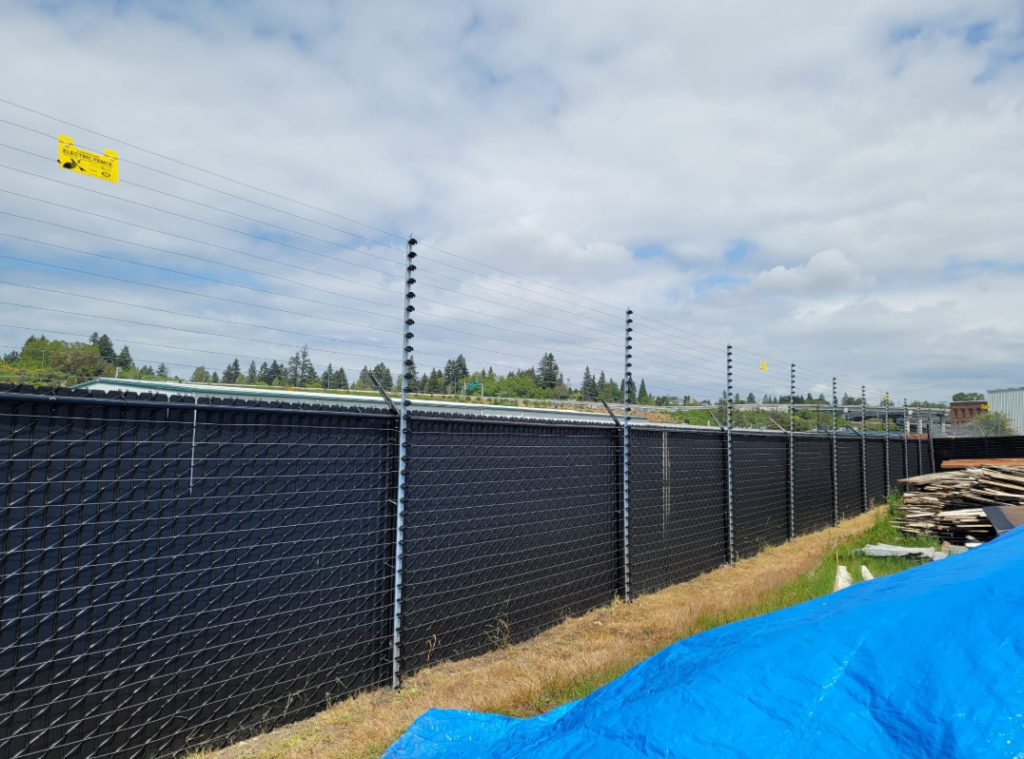
For Washington business owners, commercial electric fence laws allow properly designed and permitted security fencing when installations comply with applicable codes and safety requirements. Modern pulse perimeter fencing uses controlled, non-lethal electrical pulses that deter intruders while minimizing risk to people and wildlife. A certified installation is essential for regulatory compliance, liability protection, and long-term system performance.
Many business owners hear the term “electric fence” and immediately picture dangerous, high-voltage barriers from decades past. That perception has little in common with today’s advanced commercial security systems.
Modern commercial electric security fencing has evolved into a highly regulated security solution designed specifically for industrial properties, distribution centers, equipment yards, warehouses, and critical infrastructure.
These systems rely on carefully controlled energy pulses rather than continuous electrical current. The result creates a powerful psychological and physical deterrent while maintaining compliance with strict safety standards.
Despite these advancements, misconceptions persist regarding legality, environmental impact, and liability exposure. Some property owners assume electric security fencing poses a threat to wildlife, while others believe these systems expose businesses to lawsuits.
In reality, modern systems operate within clearly established regulations and safety guidelines when designed and installed by qualified professionals.
Understanding the facts behind commercial electric fence laws helps you make informed decisions about protecting valuable assets and inventory.
Table of Contents
What Are Commercial Electric Fence Laws in Washington?
Commercial electric fence laws vary according to jurisdiction, zoning classifications, building codes, and local ordinances. Washington businesses must comply with applicable municipal requirements, state regulations, and industry safety standards before installation.
Most jurisdictions focus on several key areas of compliance:
- Proper warning signage placement
- Approved fence heights and configurations
- Electrical output limitations
- Secure integration with perimeter fencing systems
- Professional installation and inspection requirements
These requirements exist to balance property security with public safety. Modern systems incorporate multiple safeguards that limit energy output while maintaining an effective deterrent against unauthorized access.
Washington regulations and local permitting requirements frequently reference nationally recognized safety standards for electric fence equipment. Commercial energizers are typically required to comply with standards such as UL 69 (Standard for Electric-Fence Controllers) and IEC 60335-2-76, which establish safety requirements for electric fence energizers and operational performance.
These standards help ensure that pulse perimeter fencing systems deliver controlled electrical outputs designed for deterrence rather than injury. Compliance with these recognized standards plays a significant role in maintaining safe and legally defensible installations.
Commercial properties storing high-value inventory, construction equipment, vehicles, or sensitive materials often qualify for advanced perimeter security measures when installed according to applicable codes.
You can benefit significantly from working with certified security contractors familiar with local permitting requirements and compliance procedures. Professional guidance helps eliminate costly mistakes during planning and installation.
Ultimately, proper compliance forms the foundation of a legally sound security system.
How Does Pulse Perimeter Fencing Work Without Creating Serious Safety Risks?
Pulse perimeter fencing operates differently than many people assume. Instead of delivering a continuous electrical current, these systems produce short, controlled pulses at carefully regulated intervals.
The purpose of the pulse is deterrence rather than harm. When an individual makes contact with the fence, the brief pulse creates an unpleasant sensation that encourages immediate withdrawal from the perimeter.
This design philosophy supports the concept of Non-lethal electric fence security. The system’s objective focuses on preventing unauthorized entry rather than causing injury.
Independent research has also examined the safety characteristics of modern electric fence technology. In a 2009 peer-reviewed study titled Safety of Pulsed Electric Devices, researchers Amit J. Nimunkar and John G. Webster of the University of Wisconsin-Madison evaluated several pulsed electric devices, including multiple electric fence energizers.
Their findings reinforced the distinction between controlled pulse systems and continuous electrical current, supporting the safety-focused engineering principles that define modern Non-lethal electric fence security. Research such as this contributes to the standards and design practices that guide today’s commercial security installations.
Several engineered safeguards contribute to system safety:
| Feature | Purpose | Safety Benefit |
| Controlled Pulse Timing | Delivers intermittent energy | Reduces exposure duration |
| Warning Signage | Alerts approaching individuals | Increases awareness |
| Voltage Regulation | Maintains approved output levels | Supports code compliance |
| Alarm Integration | Detects intrusion attempts | Reduces need for physical confrontation |
| Professional Grounding Systems | Ensures proper operation | Minimizes malfunction risks |
When properly designed, these systems become part of a broader business perimeter security systems strategy that includes surveillance cameras, access control, monitoring, and intrusion detection technologies.
At the end of the day, a properly engineered pulse perimeter system creates strong deterrence while maintaining a safety-focused operational framework.
How Do Commercial Electric Fences Affect Wildlife and the Environment?
Environmental concerns represent another common source of misunderstanding when it comes to commercial electric fence laws and system setup. Many property owners worry that security fencing may negatively affect local wildlife populations.
Modern Non-lethal electric fence security systems are designed with environmental considerations in mind. Because the electrical pulse is brief and controlled, wildlife encounters generally result in temporary avoidance behavior rather than injury.
Most animals quickly learn to avoid the protected perimeter after a single interaction. This behavioral adaptation reduces repeated contact and supports long-term coexistence between secured commercial sites and surrounding ecosystems.
Environmental planning also considers fence placement, visibility, and habitat patterns. Experienced installers evaluate site conditions before recommending system configurations.
Additional environmental benefits may include:
- Reduced need for aggressive physical security interventions
- Lower likelihood of trespassing-related property damage
- Improved protection of environmentally sensitive inventory areas
- Reduced dependence on extensive patrol operations
Many businesses are surprised to learn that professionally installed pulse perimeter fencing can support both security objectives and responsible environmental stewardship.
Thoughtful system design allows you to strengthen perimeter protection while respecting surrounding wildlife activity.
Why Does Certified Installation Matter for Compliance with Commercial Electric Fence Laws?
The difference between a compliant system and a problematic one usually comes down to installation quality.
Commercial electric fence laws address far more than the fence itself. Compliance extends to warning signage, electrical configuration, grounding systems, access controls, alarm integration, and documentation.
A certified installer understands how these components work together to satisfy applicable requirements. Improper installation creates risks that extend beyond system performance.
Potential issues associated with non-certified installations include inadequate signage, improper grounding, incorrect pulse settings, code violations, and insurance complications. Any of these factors could increase legal exposure following an incident.
Professional installers also maintain familiarity with changing regulations and evolving industry standards. Their expertise helps you avoid unintended compliance gaps.
Furthermore, industry standards address more than electrical output. ASTM F3297-19 and related safety guidelines also include construction recommendations intended to reduce situations where an individual could become trapped between a conventional perimeter fence and an electrified barrier.
Certified installers understand these requirements and incorporate proper spacing, warning signage, access points, and overall fence design into the completed system. These details help reduce liability concerns while supporting code compliance.
Ultimately, certified installation transforms a security asset into a legally defensible component of a risk management strategy.
How Can Electric Security Fencing Reduce Liability Rather Than Increase It?
Some business owners hesitate because they assume electric fencing automatically increases liability. But in many situations, the opposite is true.
Security incidents involving theft, vandalism, trespassing, and inventory loss create significant financial consequences. So, businesses that fail to implement reasonable security measures may face substantial losses and operational disruptions.
Modern business perimeter security systems provide documented evidence that you’ve taken reasonable steps to protect assets, employees, and visitors.
Integrated technologies strengthen this position by combining:
- Perimeter intrusion detection
- Video surveillance
- Access control systems
- Alarm monitoring
- Event recording and reporting
When incidents occur, recorded data helps establish timelines and support investigations. Documentation can become a valuable resource for insurers, law enforcement agencies, and legal counsel.
Rather than creating unnecessary risk, properly installed perimeter security systems contribute to stronger overall liability management. And a professionally designed security strategy demonstrates a commitment to responsible property protection.

Why Are More Businesses Choosing Non-Lethal Electric Fence Security?
The growth of organized theft, equipment theft, cargo crime, and after-hours trespassing has increased demand for stronger perimeter protection despite concerns about commercial electric fence laws.
Traditional fencing alone may delay intruders, but determined criminals view passive barriers as manageable obstacles. Modern pulse perimeter fencing introduces an active deterrent that significantly increases the difficulty of unauthorized entry.
Business owners appreciate several practical advantages:
- Immediate visual deterrence
- Integration with surveillance systems
- Reduced perimeter vulnerabilities
- Protection of high-value assets
- Around-the-clock monitoring capabilities
These benefits make electric security fencing particularly attractive for warehouses, distribution facilities, construction yards, logistics centers, and manufacturing sites.
The combination of deterrence, detection, and documentation creates a layered security approach that addresses modern threats more effectively than conventional fencing alone.
Businesses seeking stronger protection increasingly view pulse perimeter technology as a valuable component of comprehensive security planning.
Why Should Businesses Partner with Security Gate and Access for Commercial Electric Fence Systems?
Choosing the right security partner is just as important as choosing the right technology.
Security Gate and Access specializes in advanced perimeter protection solutions designed for commercial and industrial environments. Our team understands the regulatory requirements, operational considerations, and technical standards associated with commercial electric fence laws throughout Washington.
From site evaluation and system design to permitting assistance and certified installation, we help businesses implement compliant, effective, and reliable security solutions.
Our integrated approach combines pulse perimeter fencing with access control, surveillance technology, automated gates, intrusion detection, alarm systems, and long-term support services. This comprehensive strategy creates stronger protection for inventory, equipment, vehicles, and facilities.
Rather than relying on one-size-fits-all recommendations, we develop customized business perimeter security systems that address each property’s unique risks and operational requirements.
What Should Washington Business Owners Remember About Commercial Electric Fence Laws?
Commercial electric fence laws are far less restrictive and far more practical than many business owners assume. Modern non-lethal electric fence security systems operate within established regulatory frameworks while providing powerful protection against theft, vandalism, and unauthorized access.
When designed correctly, pulse perimeter fencing supports environmental responsibility, wildlife safety, legal compliance, and liability mitigation. The key lies in partnering with qualified professionals who understand local requirements and industry standards.
For Washington businesses seeking stronger perimeter protection, a certified installation from Security Gate and Access provides a reliable path toward compliance, risk reduction, and long-term asset security.