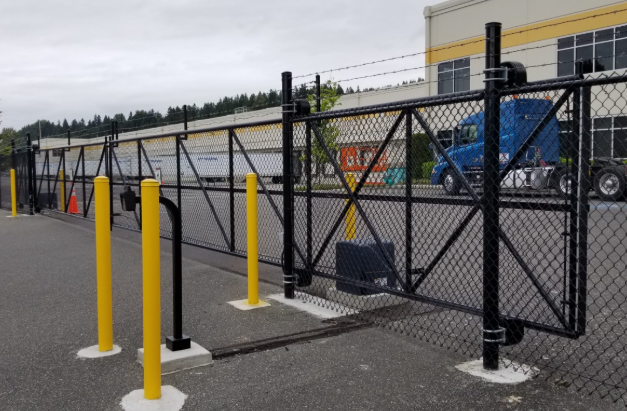
For Washington businesses, calculating the ROI of automated gate access control means comparing the ongoing costs of manual locks, lost keys, labor delays, and security risks with the long-term savings generated by digital access management. Modern automated gate access control systems are far more affordable than many owners expect, allowing construction companies and commercial facilities to recover their investment within a single project or operating cycle.
What seems like a budget-friendly security decision today could quietly become one of the biggest hidden expenses on your project tomorrow.
When securing a temporary construction entrance or commercial property, many Washington business owners instinctively reach for heavy-duty chains and commercial-grade padlocks. On paper, the decision makes perfect sense. A chain costs only a fraction of what an automated system requires upfront, making the purchase appear to protect the project’s budget.
Unfortunately, that initial price tag tells only a small part of the story.
Every construction site depends on people, equipment, and deliveries moving efficiently throughout the day. When a supervisor forgets a key, a subcontractor arrives before anyone with gate access, or an equipment delivery sits outside waiting for someone to unlock the entrance, productivity begins slipping away. Those delays rarely last just a few minutes. They interrupt schedules, idle expensive crews, and force project managers to stop what they are doing simply to open a gate.
Physical keys also introduce security concerns that become more difficult to manage as a project grows. Additional copies circulate among subcontractors, employees change roles, and temporary workers come and go throughout the construction cycle. After several months, very few businesses know exactly who still possesses a key to the property.
Instead of viewing security as a one-time equipment purchase, successful contractors evaluate its impact on daily operations, labor efficiency, and asset protection.
Looking at the complete financial picture reveals why automated gate access control continues to gain popularity across Washington’s commercial and construction industries.
Table of Contents
How Can You Calculate Commercial Security Gate ROI?
Calculating commercial security gate ROI becomes surprisingly straightforward once every expense associated with manual gate management enters the equation. Rather than comparing the purchase price of a chain with the cost of an automated gate, you should compare the total cost of ownership over the life of a project.
A practical formula looks like this:
ROI = (Annual Savings – System Investment) ÷ System Investment × 100
The savings side of the equation includes much more than replacing physical keys. Labor costs, project delays, administrative tasks, theft prevention, and reduced liability all contribute to the financial return generated by an automated system.
Consider the recurring expenses associated with traditional gate security:
- Labor spent unlocking and locking gates throughout the day
- Delays affecting subcontractors, inspections, and deliveries
- Replacement locks and duplicate key management
- Lost productivity caused by misplaced or forgotten keys
- Theft, vandalism, and unauthorized access
- Administrative time spent tracking physical credentials
When those costs are measured honestly, many Washington businesses realize they spend thousands of dollars each year managing a security system that provides very little accountability.
By comparison, automated gate access control transforms security into a predictable operational investment. Mobile credentials, scheduled access permissions, digital records, and remote management significantly reduce ongoing labor while improving accountability across the property.
Instead of repeatedly paying for inefficiencies, you can invest once in a solution that continues producing measurable operational savings.
A complete ROI calculation always extends beyond equipment costs and includes every dollar spent managing access throughout the life of the project.
Why Do Physical Keys Become Such an Expensive Liability?
Few business owners worry about keys until one disappears.
A missing key rarely represents the cost of replacing a single lock. Instead, it creates uncertainty that spreads throughout the entire property. Managers suddenly need to determine who still has access, whether duplicate keys were made without authorization, and if every lock should be replaced to restore security.
Those questions consume valuable time before any replacement hardware has even been ordered.
For active construction projects, the disruption becomes even greater. New keys must be distributed, subcontractors need updated access, and supervisors spend valuable hours coordinating logistics instead of managing the project itself. Every administrative task carries a labor cost, even though it never appears on an invoice labeled “security.”
Physical keys also provide very little accountability after something goes wrong. If equipment disappears overnight or unauthorized individuals enter the property, businesses have few tools available to determine exactly who accessed the site and when.
Automated gate access control removes much of that uncertainty. Digital credentials are assigned to individual users rather than shared among multiple workers, and every authorized entry receives a timestamp that creates a detailed access history. Temporary permissions expire automatically when projects end, eliminating the ongoing challenge of collecting keys or replacing locks after contractors leave the jobsite.
Replacing physical keys with digital credentials strengthens accountability while reducing the administrative burden associated with manual access management. That combination of improved security and lower operating costs creates measurable value throughout every stage of a project.
How Do Jobsite Keyless Entry Systems Improve Productivity?
Construction projects move quickly, and every schedule depends on dozens of independent companies working together.
Concrete suppliers arrive before sunrise, inspectors visit with little notice, equipment vendors deliver throughout the day, and subcontractors work different shifts depending on the phase of construction. Managing all of those arrivals with traditional locks quickly becomes inefficient because someone must always be available with the correct key.
That responsibility usually falls on a superintendent or project manager whose time would be far better spent overseeing construction activities.
Modern jobsite keyless entry systems remove that daily interruption by allowing authorized users to access the property through mobile credentials, temporary PIN codes, key fobs, or other digital authentication methods. You can grant or revoke permissions within minutes without physically meeting workers at the gate or tracking dozens of metal keys.
The operational improvements extend well beyond convenience.
Projects start on schedule because crews enter the site without unnecessary delays. Equipment deliveries move efficiently through secured entrances, and supervisors remain focused on managing people, schedules, and quality rather than serving as gate attendants. Every minute saved at the entrance contributes to a smoother workday across the entire project.
As labor costs continue rising throughout Washington, improving efficiency has become just as valuable as improving security. Jobsite keyless entry systems accomplish both goals simultaneously, creating operational savings that continue long after installation.
How Does Wireless Gate Access Control Protect More Than Equipment?
Security involves much more than keeping unauthorized visitors outside a fence.
Many businesses also face internal shrinkage, misplaced equipment, unauthorized borrowing of tools, and inventory discrepancies that become difficult to investigate without accurate access records. Traditional locks provide very little information after an incident occurs because anyone holding a key could have entered the property without leaving a record behind.
Wireless gate access control replaces uncertainty with documented accountability.
Every authorized entry is recorded digitally, allowing you to review who entered the property, when access occurred, and which credential was used. Instead of relying on handwritten sign-in sheets or verbal explanations, you gain objective documentation that supports both operational management and security investigations.
Automated gate access control also creates greater flexibility for changing jobsite conditions. You can:
- Issue temporary credentials for subcontractors or vendors
- Restrict access to approved working hours
- Remove permissions immediately after a project phase ends
- Review detailed access history following incidents or security concerns
This level of visibility helps reduce unauthorized activity while giving you greater confidence that access remains under control throughout every stage of construction.
Better information leads to better decision-making, and better decision-making protects both company assets and project profitability.
How Does Automated Gate Access Control Compare With Heavy-Duty Chains?
Looking strictly at the purchase price makes heavy chains appear to be the more economical solution. Looking at the total cost of ownership tells a very different story.
| Category | Heavy Chains & Padlocks | Automated Gate Access Control |
| Initial Investment | Lower | Moderate |
| Daily Operation | Manual locking and unlocking | Automated access management |
| Key Management | Lost keys and replacements | Digital credentials |
| Contractor Access | Physical key distribution | Temporary PINs and mobile access |
| Security Records | None | Complete digital logging |
| Administrative Time | High | Minimal |
| Scalability | Limited | Easily expandable |
| Long-Term Commercial Security Gate ROI | Lower | Significantly higher |
While heavy-duty chains continue serving certain short-term applications, businesses managing active jobsites, industrial facilities, storage yards, or commercial properties frequently realize that automation produces greater financial returns over time. Reduced labor, stronger accountability, improved scheduling, and lower security risks create ongoing savings that extend well beyond the initial installation.
Evaluating security through the lens of long-term operating costs rather than upfront pricing leads to more informed investment decisions.
Why Do Temporary PIN Codes Make Contractor Management Easier?
Construction projects depend on constant coordination among general contractors, subcontractors, inspectors, suppliers, and equipment vendors. Managing physical keys for every individual quickly becomes a logistical challenge, particularly when project schedules change from week to week.
Temporary PIN codes simplify that entire process.
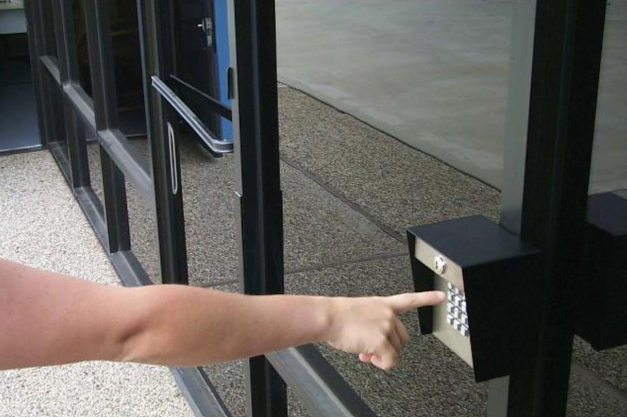
Instead of distributing permanent keys, project managers create customized access credentials that remain active only for approved users during approved timeframes. A subcontractor scheduled for three days receives access for exactly those three days. A delivery driver enters once without receiving permanent credentials. Weekend access remains unavailable unless specifically authorized.
This flexibility allows you to respond immediately when project schedules change while maintaining strong control over who enters the property.
Because every credential is linked to an individual user and every entry is recorded digitally, you gain valuable accountability without increasing administrative work. Temporary PIN codes improve convenience while supporting stronger security practices, making them one of the most valuable features included with modern automated gate access control systems.
Why Should Washington Businesses Partner With Security Gate and Access for Automated Gate Access Control Systems?
Choosing the right technology represents only part of the investment. Long-term success also depends on choosing an experienced security partner that understands the operational realities facing Washington businesses.
Security Gate and Access designs and installs automated gate access control solutions tailored to construction sites, commercial facilities, industrial properties, utility locations, municipalities, and secure storage yards throughout the region. Rather than recommending a one-size-fits-all system, our team evaluates property layout, traffic patterns, security goals, and operational requirements before developing a solution that supports both efficiency and long-term value.
Whether a business needs wireless gate access control, advanced jobsite keyless entry systems, remote management capabilities, mobile credentials, temporary contractor access, or detailed digital logging, we provide dependable systems backed by professional expertise and responsive service.
Our approach focuses on helping customers improve security while reducing hidden operating costs, allowing every investment to deliver measurable returns throughout the life of the property or construction project.
What Does the Future of Commercial Gate Security Look Like?
Businesses throughout Washington continue searching for ways to improve efficiency without sacrificing security, and automated gate access control is one area where technology delivers measurable financial value. While heavy-duty chains and padlocks are familiar, they also introduce recurring expenses through lost keys, delayed schedules, administrative burdens, and limited accountability.
Automated gate access control addresses those challenges by replacing manual processes with secure digital management. Mobile credentials, temporary PIN codes, detailed access records, and remote administration allow businesses to protect valuable assets while keeping projects moving efficiently. When every labor hour, every delivery delay, and every security risk becomes part of the financial equation, the return on investment becomes much clearer.
For companies evaluating their next construction project or planning long-term property improvements, commercial security should be viewed as more than a line item in the budget. The right automated access system supports productivity, strengthens accountability, and protects the bottom line from the first day of installation through every phase of operation.
That combination of operational efficiency and lasting financial savings makes automated gate access control one of the smartest investments a Washington business can make.